Scaling & Root Planing in Houston, TX
Scaling and root planing (SRP) is a common first-line, non-surgical treatment for periodontitis (the more serious form of gum disease). It cleans deeper below the gumline than a regular cleaning can and gives your gums a chance to heal and tighten back around your teeth. At New Smiles Dental Implant Center, we offer scaling and root planing in Houston, TX, and surrounding communities including Bellaire, Alief, Westchase, and Sharpstown.
What Is Scaling and Root Planing?
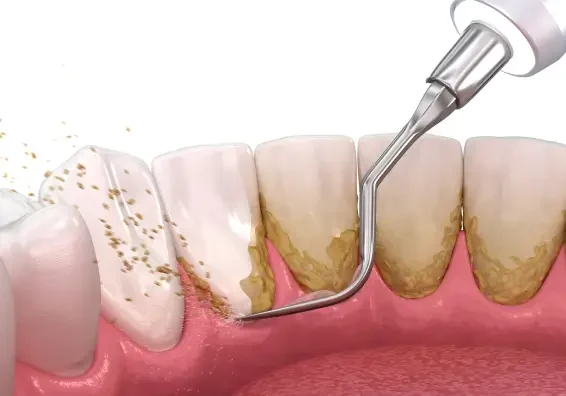
Scaling and root planing is a two-step treatment done together. Scaling removes plaque and hardened tartar (calculus) from your teeth, including the areas below the gumline and in the pockets between your teeth and gums.
Root planing then smooths the surfaces of your tooth roots, since rough surfaces give bacteria a place to cling. Smoothing them out makes it harder for buildup to return and helps your gums heal and fit more snugly against the tooth. A routine cleaning mainly handles the part of your teeth you can see, while SRP targets the part you can’t, which is where gum disease does its damage.
Why Gum Disease Often Goes Unnoticed
Gum disease often develops quietly. It’s usually painless in the early stages, so many people don’t realize anything is wrong until it has progressed.
It starts as gingivitis, when plaque irritates your gums, and they become red and puffy and bleed easily. Gingivitis is reversible with good care. If it’s left alone, bacteria move below the gumline, and the gums begin pulling away from the teeth, creating pockets. This is periodontitis, and it can damage the bone that holds your teeth in place.
Once tartar has hardened below the gumline, brushing and flossing at home won’t remove it. That’s where SRP comes in.
Signs You Might Need Scaling and Root Planing
Only an exam can tell you for sure, but these are common red flags:
Gums that bleed when you brush or floss
Red, swollen, or tender gums
Persistent bad breath or a bad taste that doesn’t go away
Gums that look like they’re shrinking, making teeth appear longer
Teeth that feel loose or have started to shift
Pockets 4 mm or deeper between your teeth and gums (healthy pockets are about 1-3 mm, and we measure these during your exam)
Pus around the gums or teeth (call us promptly if you notice this)
If you see any of these, schedule an exam rather than waiting for pain. By the time gum disease is painful, it’s usually well along.
How We Determine If You Need Treatment
We start with a full exam. We measure the depth of the pockets around each tooth, check for bleeding and gum recession, and take digital X-rays to see what’s happening with the bone underneath.
If your gums are healthy or only mildly inflamed, a regular cleaning may be all you need. If we find signs of gum disease, we’ll show you what we see, walk through your options, and recommend a plan. You’ll see the X-rays and the measurements, so you understand why we’re recommending treatment.
Need Dental Appointment?
What Happens During Your Visit
Here’s what to expect:
Numbing: We typically numb the area being treated to help keep you comfortable. If dental visits make you nervous, tell us up front. We’ll go at your pace and explain each step.
Scaling: Using hand instruments and, in many cases, ultrasonic tools, we clear plaque and tartar from above and below the gumline.
Root Planing: We smooth the root surfaces so your gum tissue can heal and fit more snugly against the tooth.
Cleanup and Aftercare: We rinse the area and go over how to care for your mouth over the next few days.
Because it’s more thorough than a standard cleaning, SRP is often done in sections, such as one side of the mouth per visit. Your plan depends on how advanced the gum disease is.
What to Expect During Recovery
Many people return to work and normal routines right away. Expect some tenderness and mild gum soreness for a few days. Your gums may bleed a little when you brush, and your teeth may feel more sensitive to hot and cold at first. That usually settles down as the gums heal. A few things help:
Stick with soft foods for the first day or two
Brush gently with a soft-bristled toothbrush, but keep brushing
Rinse with warm salt water
Avoid smoking, which can slow healing and worsen gum disease
Use over-the-counter pain relievers if needed, as directed
We’ll give you specific aftercare instructions, and you can call us if your pain gets worse instead of better, or if you notice swelling, fever, or bleeding that won’t stop.
Does SRP Cure Gum Disease?
Not on its own. SRP treats the infection and gives your gums a good chance to heal, but periodontitis is a chronic condition that needs ongoing care. That’s why follow-up matters.
After treatment, we’ll typically recommend a re-evaluation to check how your gums are responding, and more frequent maintenance cleanings than the standard twice a year. Patients who stick with the maintenance schedule and keep up their home care tend to keep their gum health stable. Patients who skip maintenance are more likely to see the disease return.
If your gums don’t respond as hoped, or the disease is more advanced, we’ll talk through additional options, including our other periodontal services.
Why Treating Gum Disease Early Matters
Untreated gum disease can lead to gum recession, bone loss, loose teeth, and eventually tooth loss. Replacing missing teeth is possible (it’s something we do regularly), but keeping your natural teeth is generally the better path.
Major dental and medical organizations recognize an association between gum disease and conditions like diabetes and heart disease, though research hasn’t shown that gum disease causes them. It’s one more reason not to ignore bleeding gums.
Explore More Services
Frequently Asked Questions