

Gum Contouring & Crown Lengthening in Houston, TX
Gum contouring and crown lengthening both reshape the gum tissue around your teeth, but they’re done for different reasons. An exam is the first step in deciding which procedure, if either, is right for you. At New Smiles Dental Implant Center, we offer both gum contouring and crown lengthening in Houston, TX, for patients in Bellaire, Alief, Westchase, Sharpstown, and nearby neighborhoods.
When Is Gum Contouring or Crown Lengthening Appropriate?
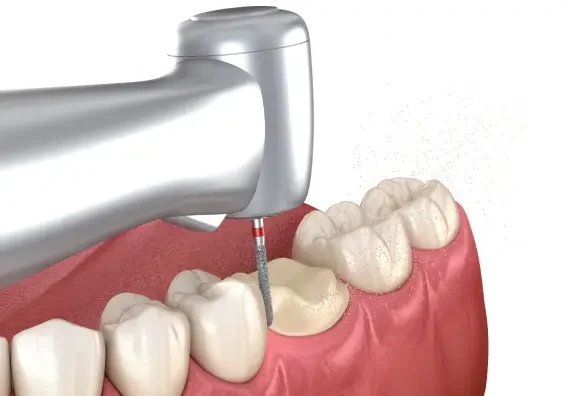
Gum contouring may be considered when the main concern is appearance, such as teeth that look short, a gumline that is uneven from one tooth to the next, or more gum showing than you’d like when you smile, and the teeth themselves are healthy. It reshapes the gum tissue, usually by removing a small amount of excess, to create a more balanced line.
Crown lengthening may be recommended when a specific tooth is broken, decayed near the gumline, or has too little structure above the gumline to hold a crown or filling. It exposes more of the tooth by adjusting gum tissue and, when needed, a small amount of bone. Crown lengthening can also be done for appearance, but it is more often done for restorative reasons.
A smile makeover might call for evening out the gumline across several teeth while one tooth needs extra exposure before it can take a crown. Some gummy smiles come from the way the jaw or upper lip works, not from extra gum. Other approaches may be a better fit, and we’ll tell you if that’s the case.
The Restorative Purpose of Crown Lengthening
The gum and bone need a certain amount of space between the edge of a crown or filling and the bone beneath it. Dentists call this the biologic width. When a crown or filling sits too close to the bone, the gum can stay irritated, and the area can be hard to keep clean.
Crown lengthening creates that space by reshaping the gum and, where necessary, a little bone, so more healthy tooth is available above the gumline. That’s also why we study your digital X-rays closely before suggesting it. If too little of the root remains, the tooth may not be restorable, and we’ll let you know if that’s the case.
How Gum Contouring Works
Planning comes first. We look at your smile at rest and in full, along with your gum height, tooth shape, and bite. On the day of treatment, we numb the area, carefully remove excess tissue, and shape the gumline. The number of visits you need depends on how many teeth are involved and what else is in your treatment plan. If veneers or crowns are part of your treatment plan, we’ll talk through whether the gumline should be done first.
How Crown Lengthening Works
The early steps are similar: exam, X-rays, numbing. Then the gum is adjusted to expose more tooth, and if bone is in the way, a small amount is reshaped. The gum is then repositioned and secured.
Healing time is an important part of the process. Gum and bone need time to heal before a final crown or filling goes on, and that period varies by case and by tooth. It’s often several weeks, and sometimes longer for front teeth where appearance matters most. We’ll give you a timeline before you start. Here’s how it usually goes:
Visit one: exam, X-rays, and a treatment plan
Procedure visit: the lengthening itself
Healing period: length varies, with a follow-up check along the way
Restoration visit: your final crown or filling
Need Dental Appointment?
What to Expect During Recovery
Recovery time varies depending on the procedure, how many teeth were treated, and whether bone was reshaped, but this is a general timeline of what many patients experience:
Days 1 to 3: Soreness, mild swelling, and a little bleeding are common. Soft, cool foods are usually easiest, and over-the-counter pain relievers can help, as directed. Avoid smoking throughout the healing period.
Days 4 to 7: Soreness usually fades. You’ll brush gently around the area, and we’ll show you how.
Week Two and Beyond: The tissue often looks and feels better within a couple of weeks, but full healing can take longer, especially if bone was reshaped. Follow-up visits let us monitor your healing.
We’ll give you written aftercare instructions for your specific procedure. Call us if your pain gets worse instead of better, or if you notice significant swelling, fever, or bleeding that won’t stop.
Risks and Who May Not Be a Candidate
Like any dental procedure, these carry risks, including infection, bleeding, tooth sensitivity, gum recession, and results that don’t match what you hoped for. Gum tissue can also partially grow back after contouring, particularly when excess tissue wasn’t the only cause of the problem. We may recommend a different approach, or treating something else first, if you have:
Active gum disease, which usually needs treatment before any reshaping
A gummy smile that comes mainly from jaw position or lip movement
Health conditions or medications that can affect healing
Too little healthy tooth structure for the tooth to be restored
We’ll go over the risks and your realistic options before you decide.
Explore More Services
Frequently Asked Questions
Schedule Your Appointment
If your gumline has been bothering you, or a tooth needs more exposed structure before it can be restored, we offer gum contouring and crown lengthening in Houston, TX. Call us today for an appointment.